CABLE ASSEMBLIES FOR INDUSTRIAL ROBOTICS IN HARSH MANUFACTURING ENVIRONMENTS

The modern industrial manufacturing floor is rapidly evolving. Robotics are increasingly being integrated into production lines to enhance speed, efficiency, and safety. As these robotic systems become more complex, their interconnect requirements also grow more demanding. Cable assemblies used in industrial robotics must endure extreme operating conditions while maintaining stable electrical and signal performance. Meritec offers ruggedized cable assemblies engineered specifically for industrial robotics operating in harsh manufacturing environments.
The Demands of Industrial Robotics Applications
Industrial robots are subject to a range of environmental and mechanical challenges that impact the reliability of their cable assemblies. From repetitive flexing and rapid articulation to exposure to chemicals, abrasion, and electromagnetic interference (EMI), the interconnect systems must maintain high performance under stress.
Cable assemblies must address:
- High-flex and torsional motion
- Oil, coolant, and solvent exposure
- Vibration and mechanical shock
- Dust and particulate infiltration
- EMI and signal integrity threats
- Temperature fluctuations
Any weakness in the cable assembly could lead to communication loss, actuator failure, or downtime on production lines. That’s why rugged cable design, testing, and material selection are critical for industrial robotic applications.
Key Engineering Requirements for Harsh Manufacturing
Designing cable assemblies for industrial robotics involves more than simple connectivity. It requires a precise blend of mechanical durability, signal integrity, and environmental resilience. Each application may involve moving joints, rotational axes, vertical articulations, or mounted sensors all of which require cable routing that does not compromise flexibility or performance.
Key design priorities include:
1. Flexibility and Cycle Life
Cables must withstand millions of bend cycles without signal degradation or mechanical fatigue. Flex-rated insulation and jacket materials ensure reliability under constant motion.
2. Chemical and Fluid Resistance
Robotic arms and end effectors are often exposed to lubricants, coolants, or cleaning agents. Materials such as polyurethane (PUR), thermoplastic elastomer (TPE), and fluoropolymer jackets help protect internal conductors.
3. EMI Shielding and Crosstalk Control
Industrial floors are full of EMI sources, including high-current motors and switching devices. Shielded cable assemblies with braided, foil, or hybrid EMI shields maintain clean signal transmission.
4. Compact and Lightweight Design
Minimizing weight and cable bundle size allows smoother robotic articulation and reduced torque loads. Custom low-profile assemblies can also reduce clutter and improve airflow.
5. Secure Connectors and Strain Relief
Connectors must maintain mating integrity under vibration, pulling, or accidental contact. Overmolded strain reliefs help prevent conductor breakage and jacket separation.
Table: Industrial Robotics Cable Assembly Requirements
| Design Feature | Functional Benefit |
|---|---|
| High-flex cable cores | Withstand repetitive motion |
| Chemical-resistant jackets | Prevent damage from oil, coolant, or solvents |
| EMI/RFI shielding | Maintain signal integrity in noisy environments |
| Compact profile | Support tight robotic joints and reduced torque |
| Overmolded connectors | Enhance durability and ease of installation |
Materials Selection for Performance and Durability
Choosing the right materials directly impacts the longevity and reliability of cable assemblies. Meritec evaluates each application to match the environment, motion profile, and electrical needs with appropriate materials.
- Conductors: Stranded tinned copper or silver-plated copper for conductivity and flex life.
- Insulation: FEP, TPE, or XLPE for high dielectric strength and heat resistance.
- Shielding: Aluminum-polyester foil, copper braid, or composite shield for EMI protection.
- Jackets: PUR and TPE are ideal for harsh chemical environments and mechanical abrasion.
Each material layer contributes to the system's overall robustness and ensures that assemblies remain operational through the equipment's lifecycle.
Customization for Robotic System Integration
Not all robotic systems are the same. Variations in arm configuration, axis count, mounted tooling, and control system architecture demand tailored cable solutions. Meritec specializes in custom cable assemblies designed to interface seamlessly with robotic components while addressing system-specific stressors.
Custom options include:
- Application-specific cable lengths and bend radii
- Hybrid cable designs combining signal, power, and control lines
- Integrated breakout assemblies for multi-axis joints
- Panel-mount or circular MIL-style connectors
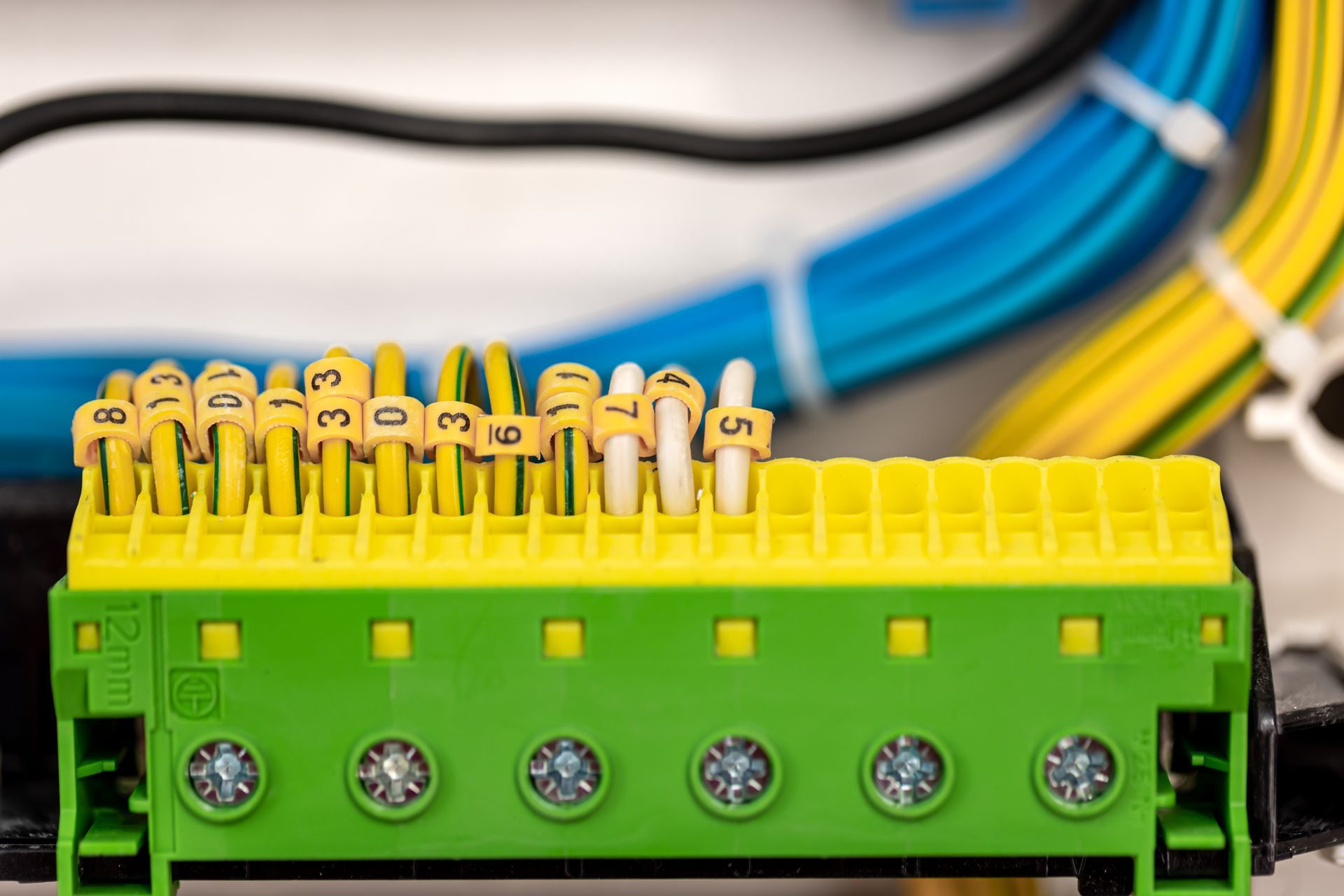
- Color-coded, labeled conductors for simplified installation
Every design is built with reliability and ease of maintenance in mind, minimizing the risk of operator error during replacement or service.
Environmental and Compliance Standards
Manufacturing facilities must meet various regulatory and safety standards. Cable assemblies used in robotic systems often fall under industry certifications and testing requirements for electrical safety, flame retardancy, and EMI compliance.
Meritec designs industrial robotics cable assemblies to meet or exceed:
- UL and CSA safety listings
- RoHS and REACH compliance for materials
- CE mark and IEC standards for international deployment
- IP67 and IP68 sealing options for ingress protection
- ISO 9001 and AS9100 quality management standards
By aligning interconnect solutions with these requirements, Meritec ensures integration readiness for both domestic and global manufacturing applications.
Supporting Automation and Digital Transformation
Cable assemblies play a behind the scenes role in enabling factory automation and Industry 4.0 transformations. Robotic sensors, servos, and controllers must transmit data without latency and power without interruption. As systems move toward predictive maintenance, real time analytics, and machine learning, signal reliability becomes even more critical.
Meritec helps manufacturers future proof their robotics infrastructure with:
- High-speed data transmission options (USB, Ethernet, serial)
- Low-skew differential pairs for timing-sensitive devices
- Modular assemblies that support scalability and reconfiguration
- Engineering support for legacy integration and new product introduction (NPI)
These features provide a foundation for long-term automation investments and continuous production improvement.
Lifecycle Testing and Performance Validation
All Meritec cable assemblies are subjected to extensive qualification testing before deployment. Each assembly undergoes mechanical, electrical, and environmental validation to ensure consistency and field performance.
Testing protocols may include:
- Flex testing: Repeated motion simulation for bend/flex failure
- Thermal cycling: Heat and cold exposure to assess material integrity
- Vibration and shock: Mechanical stress response
- Salt spray and chemical exposure: Corrosion and fluid ingress resistance
- Electrical continuity and impedance testing: Signal fidelity verification
This comprehensive process ensures every cable delivered is ready for rugged, real-world deployment.
Partnering with Meritec for Robotic Interconnect Solutions
Industrial robotics depend on reliable cable assemblies that can survive harsh manufacturing conditions without failure. Meritec offers precision-engineered, customizable interconnect solutions that meet the needs of high-flex robotic systems while supporting automation and operational efficiency.
With in-house design, prototyping, and production, Meritec provides a full lifecycle solution for advanced robotic applications. Whether you’re upgrading a legacy system or building a next-generation production line, Meritec has the cable expertise to keep your robotics running smoothly and efficiently.