CABLE MANAGEMENT SOLUTIONS FOR INDUSTRIAL AUTOMATION
As industrial automation systems evolve with increased complexity and interconnectivity, cable management has become foundational to maintaining operational reliability, minimizing downtime, and enhancing equipment lifespan. In environments where robotic arms, vision systems, and high-speed controllers must communicate seamlessly, poor cable design can be a costly liability.
Manufacturers, OEMs, and integrators across industries like automotive, food processing, and pharmaceuticals
require purpose-built cable management strategies that account for environmental conditions, movement cycles, space constraints, and signal integrity. As industrial control systems shift toward higher data speeds and tighter tolerances, the importance of engineered cable systems continues to grow.
Understanding the Challenges of Cable Routing in Industrial Settings
Cable routing in industrial automation is rarely straightforward. Mechanical stresses, vibration, temperature extremes, chemicals, and physical motion all introduce risk factors that can degrade cable performance over time. Improper bend radii, misaligned cable paths, or exposure to sharp edges can lead to premature insulation wear, compromised shielding, or intermittent signal loss.
One of the most common root causes of system downtime is cable failure whether due to flex fatigue, connector instability, or EMI disruption. As industrial networks transmit growing volumes of control, feedback, and vision data, cable designs and routing techniques must evolve to handle dynamic loads while maintaining performance.
Key Cable Management Principles for Reliable Automation
An effective cable management system is more than containment it begins with intelligent design. During planning, engineers must consider environmental risks, mechanical movement, and service access. The routing architecture should be modular, easily upgradable, and accessible for inspection or replacement.
Cable trays, drag chains, and flexible conduits help define and protect routing paths. Inside control panels, cable runs must separate high-voltage lines from low-voltage control and data cables to prevent EMI. For moving equipment, high-flex cables and dynamic carriers ensure performance under continuous motion.
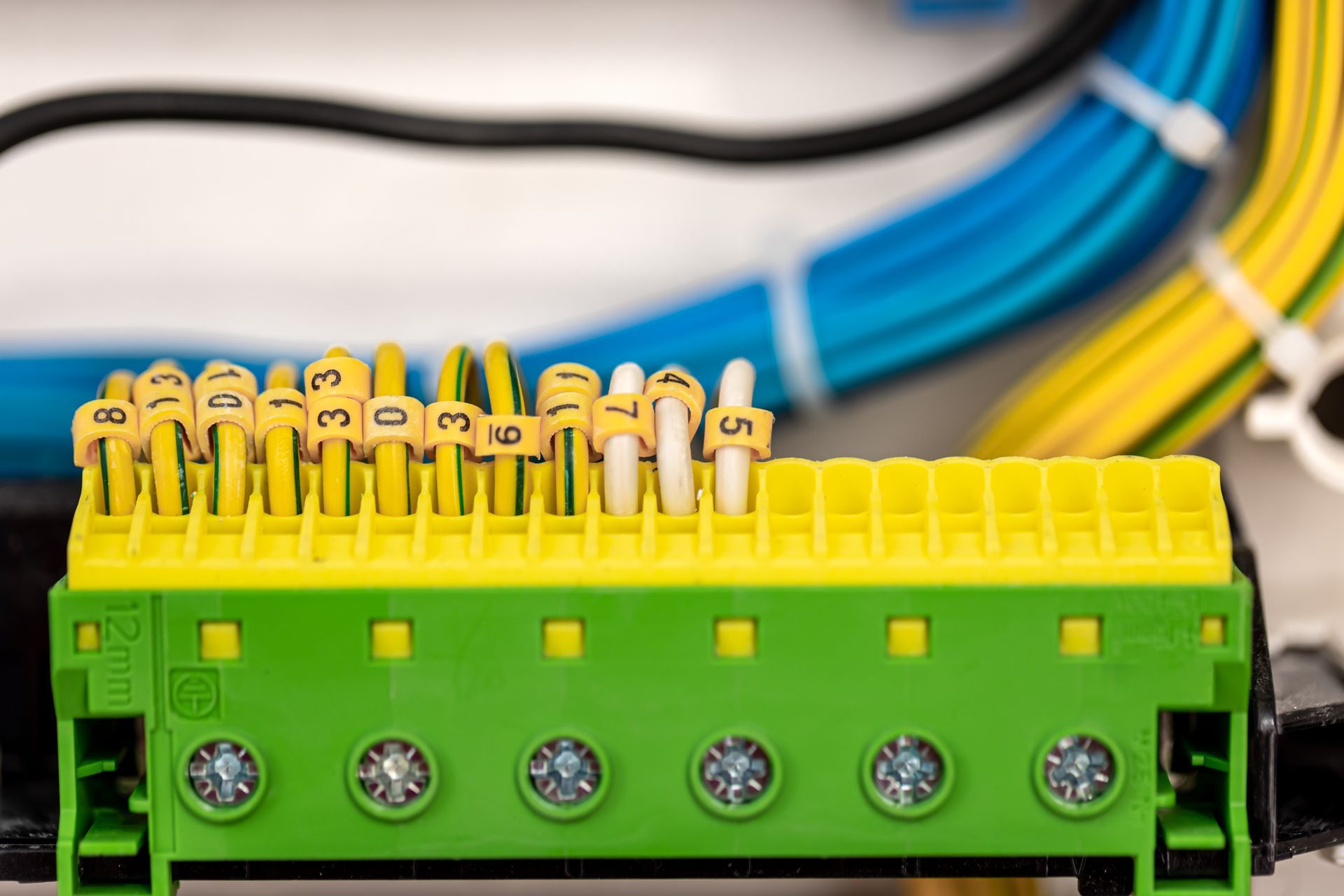
Labeling and traceability are equally important. As facilities scale, having a clear identification system for cables supports efficient maintenance and speeds up diagnostics reducing downtime when issues arise.
Material Considerations and Environmental Resistance
Selecting the right cable materials is critical in harsh industrial environments. Chemical resistance, temperature stability, UV tolerance, and mechanical resilience vary significantly by jacket type and insulation.
Here’s a
comparison table
summarizing common cable jacket materials used in automation:
| Material | Strengths | Common Applications |
|---|---|---|
| PVC | Low-cost, flexible, good for general indoor use | Control panels, conveyors |
| TPE | High flexibility, chemical/oil resistant | Robotics, flexing applications |
| PUR | Abrasion resistant, halogen-free, good flex life | Automotive lines, packaging machinery |
| FEP/PTFE | High temperature, chemically inert | Food, pharma, high-temperature zones |
Gland fittings, strain reliefs, and enclosures further protect connection points and entry interfaces. When cables must endure vibration or movement, mechanical anchoring and vibration-isolated brackets prevent wear from long-term stress.
Modular Systems for Adaptive Manufacturing
Modern industrial environments demand agility. Production lines are frequently reconfigured for new products, processes, or efficiency improvements. That’s why modular cable management architectures including quick-disconnect connectors, pluggable terminal blocks, and DIN rail accessories are gaining traction.
These modular approaches allow rapid installation and minimal disruption when adding or replacing cables. Pre-terminated cable assemblies reduce human error and downtime during expansion or rework phases. Enclosure systems can be modified or scaled without removing full cable harnesses, keeping production schedules intact.
Meritec supports this modular philosophy with
customized assemblies built to exact specifications including connector type, length, shielding method, and jacket material. Our assemblies are engineered for plug-and-play convenience while maintaining rugged performance under industrial conditions.
Managing High-Speed Signals in Industrial Networks
The shift toward real-time industrial communication such as EtherNet/IP, PROFINET, and EtherCAT has introduced new challenges in cable management. Signal integrity must be preserved across long runs and through noisy environments.
Factors influencing signal quality include:
- Routing proximity to motors or drives (EMI sources)
- Cable geometry and shielding effectiveness
- Quality of terminations and grounding points
- Maintenance of impedance along the cable path
At Meritec, we engineer cable assemblies with
low-skew differential pair designs, precision shielding, and robust EMI control. Our assemblies are validated for high-cycle operation in control environments demanding signal clarity and mechanical reliability.
Custom Cable Assemblies: Built for Application-Specific Needs
Off-the-shelf cables often fall short in demanding automation environments where space constraints, unique routing paths, or hybrid data-power needs are present. That’s where custom assemblies offer a strategic advantage.
Whether you're integrating a robotic tool changer, retrofitting legacy equipment, or deploying a smart packaging cell, Meritec provides cable systems tailored to the specific footprint and functional needs of your equipment.
Each solution is engineered in collaboration with your design team to match electrical, mechanical, and environmental parameters including overmolding, jacket selection, and connector layout. The result is an interconnect solution that not only fits but performs reliably under stress.
Maintenance Planning: Reducing Downtime Through Design
A proactive approach to maintenance starts at the design stage. Cables should be installed with easy access for inspection and replacement. Labeling, routing paths, and component modularity all influence how quickly systems can be serviced.
Predictive maintenance technologies like thermal imaging and signal monitoring can provide early indicators of degradation. Routine inspections for worn insulation, loose connectors, or EMI issues help extend service life.
Meritec’s assemblies are built with
maintenance in mind utilizing high-flex materials, robust strain reliefs, and durable overmolds. We design for both performance and serviceability to support long-term system health.
FAQ: Industrial Cable Management
What’s the biggest cause of cable failure in automation?
Repeated motion and vibration without proper strain relief or flexible cable selection is a leading cause. Environmental factors like heat and chemical exposure also play a role.
How can I reduce EMI in industrial cable routing?
Separate data and power cables, use shielded cable designs, ensure proper grounding, and avoid routing near noisy components like drives or motors.
When should I use a custom cable assembly instead of off-the-shelf?
When dealing with space constraints, motion paths, hybrid signals, or harsh environments that demand specific materials and connectors.
Are modular cable systems worth the investment?
Yes especially in facilities with frequent upgrades or line changes. Modular systems reduce downtime, improve scalability, and simplify maintenance.
What bend radius is safe for flexible cables?
It depends on the cable type, but a general rule is 6–10 times the cable diameter for dynamic applications. Always refer to the cable manufacturer’s specs.
Engineering with Meritec: Your Cable Management Partner
Cable management may not always be visible but its impact is felt in every second of uptime, every smooth data transmission, and every safely operating machine. It’s the hidden infrastructure behind automation success.
Meritec offers engineered interconnect solutions that help manufacturers and automation professionals meet today’s performance and uptime demands. From custom harnesses to ruggedized assemblies, every product is built for durability, flexibility, and serviceability.
Let’s reduce your risk of downtime with high-performance cable assemblies that work as hard as your system does.
Ready to talk? Contact our team today to discuss your next automation project.